Why Edmond matters to ARP — and what that means for your install
ARP Heat And Air is based on the north side of Edmond. Charlie, the owner and lead technician, has lived here for over a decade. His van is parked in an Edmond driveway every night, which sounds trivial until you need emergency service at 10 PM on a Sunday — every other call in the metro starts with a drive from somewhere else; Edmond calls start with Charlie walking out his front door. This geographic fact drives almost every practical difference between our service in Edmond and our service in, say, Newcastle or Harrah.
The typical Edmond arrival time from the moment we answer the phone to the moment the van pulls up is roughly 15 minutes during business hours and 25–40 minutes after hours. We do not charge a separate trip fee for any address inside the Edmond city limits (ZIP codes 73003, 73012, 73013, 73025, 73034). We also don't charge overtime for after-hours calls inside Edmond, which is unusual — most metro HVAC companies bill a 1.5x or 2x overtime rate on nights and weekends.
Edmond's housing stock, neighborhood by neighborhood
Edmond isn't one place — it's four or five distinct housing eras stacked on top of each other. Knowing which era your home belongs to tells us more about your AC installation than almost anything else, because ductwork, electrical panels, and structural tonnage capacity all vary predictably with build year. Here is what we actually see in each major Edmond neighborhood:
Oak Tree & Kickingbird (1970s–1980s, golf-course homes)
What we see: Oak Tree is a gated golf-course community built primarily in the late 1970s and early 1980s, with homes ranging from 3,200 to 5,000+ square feet, many two-story with vaulted ceilings. Kickingbird, centered around the Kickingbird Golf Club just west of the Oak Tree area, is mostly 1980s construction on wooded lots. Both neighborhoods share a housing-era problem: original equipment was typically a single 3.5- or 4-ton system, which by today's standards is often undersized for the square footage once you correct for Oklahoma's 100°+ summer design temperature and add infiltration losses.
What that means for your install: We almost never replace an Oak Tree or Kickingbird system without a full Manual J load calculation, and about one in three we quote as a dual-system setup (two smaller units) instead of a single large unit. The ductwork from that era was sized for a smaller load, so a simple like-for-like upgrade often produces short-cycling, high indoor humidity, and that "cold-but-clammy" feeling homeowners sometimes describe. If your Oak Tree home has never had a real load calc done, you're probably paying for it in higher bills and shorter equipment life.
Deer Creek & The Trails (late 1990s–2010s)
What we see: Deer Creek — the area roughly between Memorial Road and Covell, along Sorghum Mill — is Edmond's most-built-out suburban corridor of the 2000s. Most homes are 2,500–3,800 square feet, builder-grade from that era. The Trails, a little further east, has a similar mix. The builder-grade 13–14 SEER systems installed when these homes went up are now 15–20 years old and hitting the replacement window.
What that means for your install: For these homes we often can do a same-tonnage replacement with a modern 15 SEER2 system and genuinely improve comfort, because modern two-stage compressors run more continuously at a lower output, which flattens temperature swings and drops humidity. Ductwork is usually adequate. Budget: $5,500–$7,500 for a typical 3-ton replacement.
Fairfax, Brookhaven North, Heritage Park (1980s–1990s mid-size)
What we see: Classic 1,800–2,500 square foot Edmond homes, single story, on lots between Danforth and 2nd Street, often within a mile or two of downtown. Many have had one system replacement already in their lifetime — usually a cheap builder-spec unit installed by whoever was cheapest 10–12 years ago.
What that means for your install: These are often the best-value installs we do. A clean 3-ton 15 SEER2 swap with a proper condensate safety switch, a pan float, a filter rack upgrade, and a new line-set lockout (required under OK code for R-410A to R-454B transitions) typically lands in the $5,000–$6,500 range. Single-day install. Most Fairfax homes have the attic space for a full coil swap without drywall damage, which is a significant cost saver.
Downtown Edmond / University District (pre-1950, some 1960s infill)
What we see: The area east of Broadway and south of 2nd Street, near the University of Central Oklahoma (UCO) and along the streets around Shannon Miller Park and the historic first-public-schoolhouse-in-Oklahoma-Territory building. Many homes here are under 1,600 square feet but have limited or retrofit-only ductwork, because they were built in the era of gravity furnaces and window AC.
What that means for your install: Ductless mini-splits are often the honest answer here, not a central system. We'll tell you if they are. If the home has been fully re-ducted in a recent remodel, a 2–2.5 ton central system is fine; if not, forcing central AC into a 1920s or 1930s home usually means ugly soffits, lost closet space, and mediocre performance. We'd rather sell you a multi-zone mini-split that actually works than a central system that disappoints you.
What a typical Edmond install day looks like
We arrive between 7:30 and 8:00 AM. We lay drop cloths from the front door to the equipment location and from the front door to the attic hatch. The old system comes out first — refrigerant is recovered to EPA standards using a certified machine, not vented (venting is both illegal and something we'd never do). The old evaporator coil, line set, and condenser are removed and set aside for recycling. We pressure-test the new line set with dry nitrogen to 500 PSI and hold for 15 minutes; any drop and we find the leak before we charge the system. A micron-level vacuum is pulled to at least 500 microns, confirmed on a digital gauge, and held for a decay test.
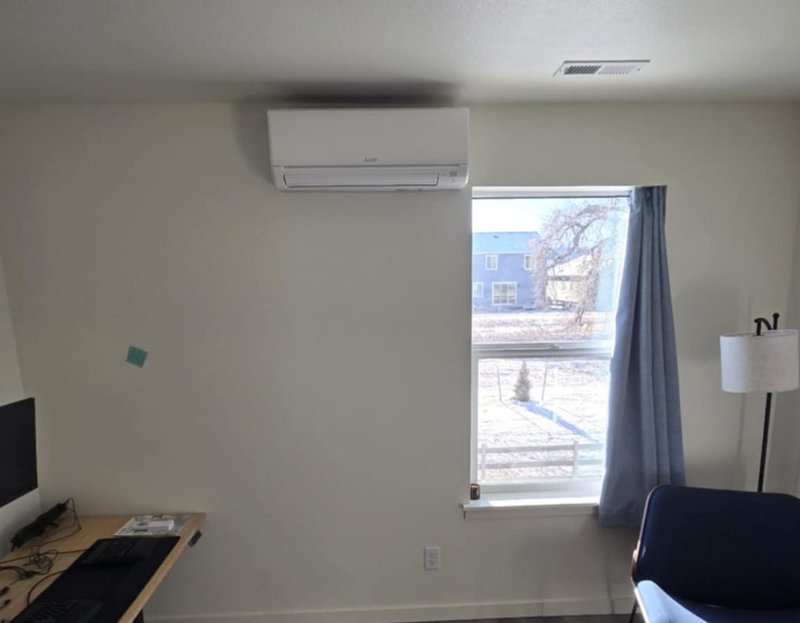
The new condenser goes on the same pad (or a fresh pad if the old one was cracked or out of level). The indoor coil is installed, brazed with nitrogen purge, and the drain line is replaced with new PVC and a properly sloped trap. We install a condensate safety switch on every install — if the drain ever clogs, the system shuts down instead of flooding your ceiling. A pan float goes in the secondary pan as a backup.
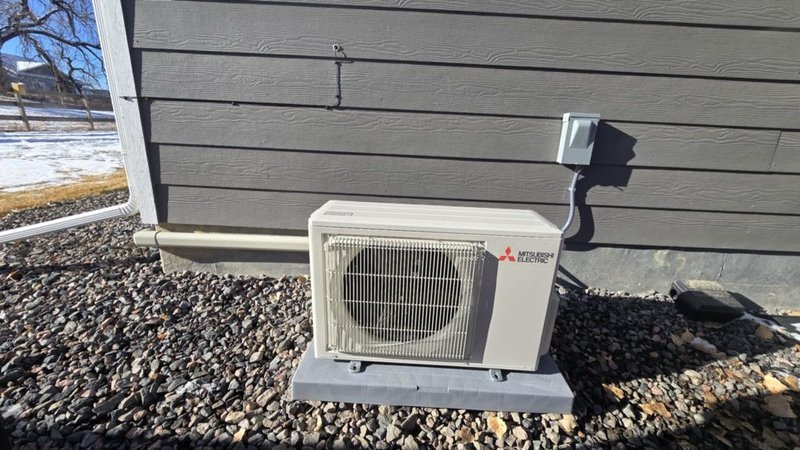
Commissioning: we weigh in the factory charge, adjust for line-set length, run the system for a full cycle, check sub-cooling and superheat against the manufacturer's spec, verify airflow at 350–400 CFM per ton, and make sure the thermostat is calibrated and paired. We then walk you through what we did, show you the filter schedule, and leave you with the paperwork you need for your warranty and for the city of Edmond's permit closeout.
Edmond-specific pricing guide (2026)
These are ranges we actually quote right now, not marketing brochure numbers. Final pricing depends on ductwork, electrical, and equipment selection.
- 2.5–3 ton single-stage 14 SEER2 replacement (typical Fairfax/Heritage Park ranch): $4,500–$6,000
- 3–3.5 ton two-stage 15–16 SEER2 replacement (typical Deer Creek, The Trails): $5,500–$7,500
- 4–5 ton variable-speed 18–20 SEER2 (Oak Tree, Kickingbird, Deer Creek Estates): $7,500–$9,500
- Dual-system install (two smaller units for vaulted-ceiling two-story homes): $8,500–$12,500
- Ductless mini-split, multi-zone (downtown Edmond historic homes): $6,000–$11,000 depending on zones
Permits, code, and the Edmond inspection process
Every central AC installation in Edmond requires a mechanical permit pulled through the City of Edmond's Development Services office. We pull this ourselves — homeowners shouldn't have to. The permit runs $65–$90 depending on the scope and is included in our quote, not added on later. An inspector visits after the install to verify proper clearances, condensate drain design, electrical disconnect installation, and refrigerant line set routing. We coordinate the inspection directly; you don't need to be home unless the inspector needs attic access.
Starting in 2025, the EPA phased down R-410A refrigerant in favor of low-GWP alternatives like R-454B. If your current system is R-410A and we're doing a new install, the new system will be R-454B. This is not a reason to panic — R-454B is a drop-in equivalent for practical purposes — but it does mean your line set may need to be flushed or replaced, and older service valves may not be compatible. We'll confirm this during the estimate.
What Edmond homeowners say
We've been doing this in Edmond since 2011. A few specific things Edmond customers have told us, paraphrased from actual reviews:
"Charlie showed up, told me my existing unit had maybe 2 good years left but was running fine, and said to call him when it actually failed. Any other guy would have sold me a new system that day." — Edmond homeowner, Oak Tree area
"He came out on a Saturday night. Saturday. Night. Fixed a bad capacitor, charged me for the part and maybe 20 minutes of labor, no weekend surcharge." — Edmond homeowner, Fairfax
"We've used Charlie/ARP at two different houses over eight years. Both our parents use him. My brother does too. That's not an accident." — Edmond homeowner, Brookhaven North
The honest case against hiring us for an Edmond install
We're not the cheapest. We're not the biggest. We don't have a call center, a sales team, or a fleet of trucks. If you want a national franchise with financing running through a third-party lender and a "comfort advisor" who visits in a polo shirt before any technician ever looks at your system, that's a fine choice — it's just not what we do. If you want someone to beat the lowest quote you got from a two-guy shop operating on cash, also not us.
What we are: a small, licensed, Edmond-based HVAC contractor that shows up, does the work right, and charges a fair price. That's the entire business model, and it's why most of our Edmond work comes from repeat customers and referrals instead of Google Ads.
A typical Edmond service week
To give you a concrete sense of what owner-as-technician actually looks like in practice: in the average Edmond week we run roughly 5–8 calls. Two or three of those are planned installations scheduled weeks in advance, typically in Oak Tree or Deer Creek. Another two or three are diagnostic or repair calls, usually in the Fairfax, Brookhaven North, or Heritage Park mid-size belt. One or two are follow-up and commissioning visits on jobs installed in the previous month. And roughly once a week, something happens that doesn't fit the calendar — a Saturday night capacitor failure during a heat wave, a Sunday morning no-heat call in January, a Tuesday afternoon emergency because someone's elderly parent is in a house that's hit 88°F.
The geographic reality of working from Edmond is that the response curve goes: Edmond proper (~15 minutes), the Edmond-Oklahoma County line south (~20 minutes), central OKC and Nichols Hills (25–35 minutes), Norman (35–45 minutes), Moore via I-35 (25–35 minutes), and Yukon via the Kilpatrick Turnpike (30–40 minutes). For a one-truck operation, that's a manageable radius. It's also why we don't pretend to serve Lawton or Stillwater — the drive time kills our response quality, and a quality promise we can't keep is worse than no promise at all.
What this means for you as a potential Edmond customer: when you call, the answer to "how soon can you get here?" is usually measured in single-digit minutes during business hours. When you schedule an install, it's usually scheduled within 3–7 days (longer in July–August when summer backlog peaks). And when something goes wrong on a job — because things occasionally do — the fix-it visit is typically same-day, because the job site is 12 minutes from the shop.